
Chemical straightening may promise instant smoothness, but healthy hair needs recovery. Spino Rice Hair Mask supports softer, shinier, easier-to-style hair without harsh straightening treatments.
For many women, the desire for smoother hair does not really start with wanting “straight” hair. It usually starts with something much simpler: hair that feels dry, frizzy, weak, dull, or difficult to control.
This is why chemical straightening treatments became so popular. They promise fast discipline. They offer the idea of instantly transforming tired, textured, or frizzy hair into a smoother shape. But the growing concern around some straightening formulas shows an important truth: the fastest beauty solution is not always the safest one.
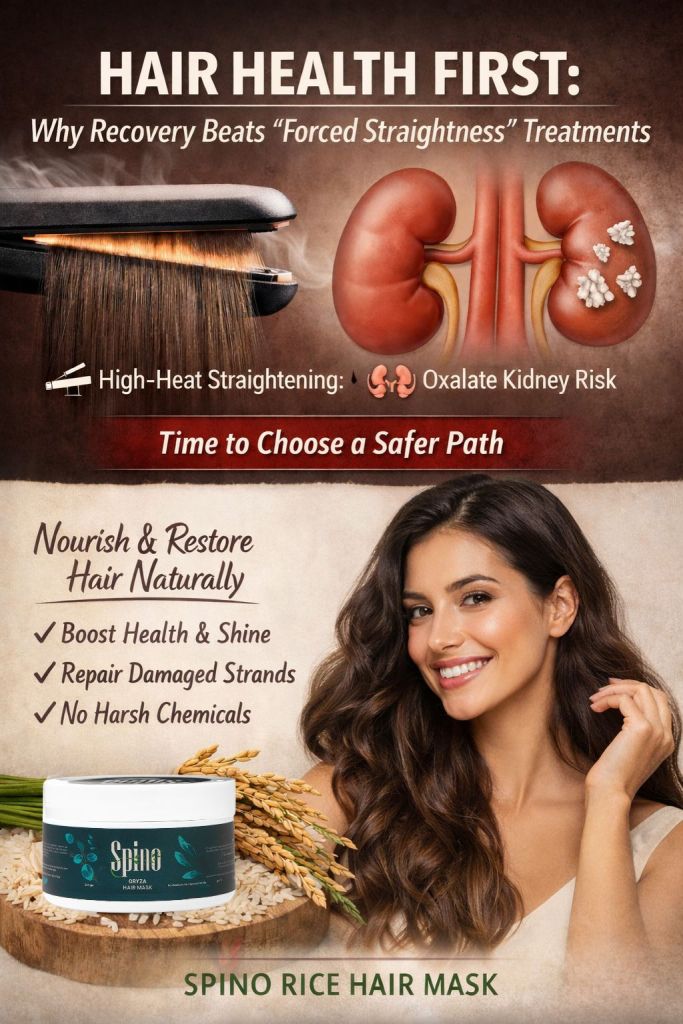
Recently, health authorities in France raised serious concerns about hair-straightening products containing glyoxylic acid. ANSES, the French health and safety agency, stated in January 2025 that glyoxylic acid used in some straightening products was very likely responsible for cases of acute kidney failure, and recommended avoiding these products while regulatory measures are being considered. The European Commission also opened a call for scientific data in April 2025 to support a safety assessment of glyoxylic acid in hair-straightening products, particularly when used at high temperature.
This does not mean every hair treatment is dangerous. It means consumers should look more carefully at the type of treatment they are choosing, how it works, and whether the beauty result is being achieved through recovery—or through aggressive chemical stress.
The problem with “instant smoothness”
Straightening treatments are attractive because they offer an immediate visible change. Hair looks flatter, shinier, and easier to style. But in many cases, this result is not the same as true hair health.
Some straightening systems work by forcing the hair into a new shape using chemical action combined with very high heat. When the formula is applied close to the scalp, the concern becomes bigger than hair damage alone. The scalp is living skin, and under certain conditions, chemical exposure may become more serious than simple cosmetic irritation.
This is why the recent discussion around glyoxylic acid matters. The concern is not only whether the hair becomes dry or brittle after treatment. The concern is whether certain products, especially under salon heat and repeated exposure, may create risks beyond the hair itself.
“Formaldehyde-free” does not always mean gentle
For years, many consumers were told to avoid harsh straightening systems because of formaldehyde-related concerns. As a result, “formaldehyde-free” became a powerful marketing phrase.
But this phrase can be misleading if it makes people assume that a product is automatically gentle or risk-free. A product can be formaldehyde-free and still depend on another powerful chemical mechanism. The current concern around glyoxylic acid shows that the safety conversation has moved beyond one ingredient.
The smarter question is not only: “Does this product contain formaldehyde?”
The better question is: “How does this product change my hair, what chemicals are involved, is high heat required, and does it touch my scalp?”
This is where the difference between straightening and recovery becomes essential.
Hair recovery works with the hair, not against it
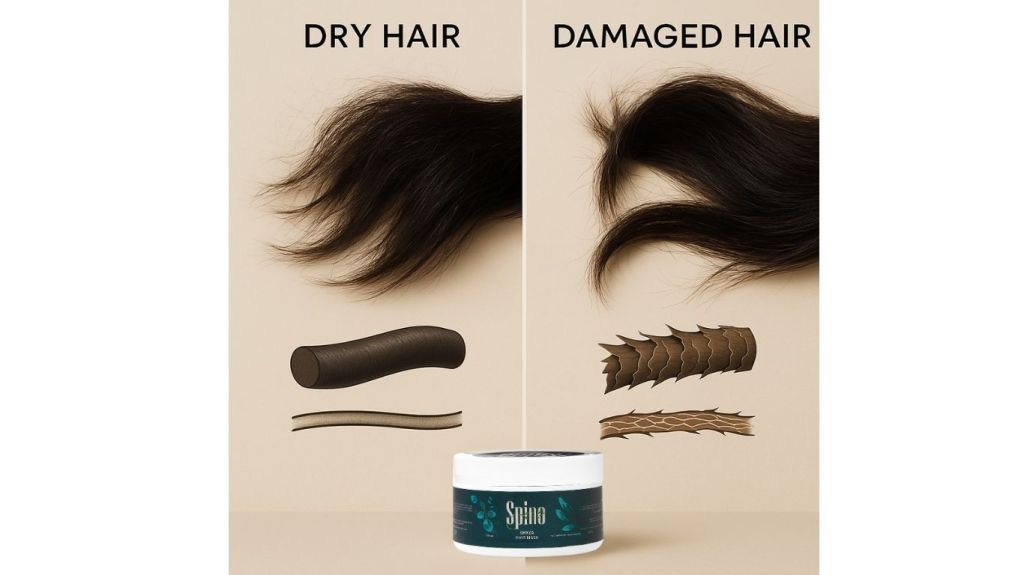
Damaged hair often looks messy because its condition has been weakened. The surface becomes rougher. The strands lose softness. Breakage increases. Frizz becomes more visible. Shine disappears because light no longer reflects smoothly from the hair surface.
In this situation, forcing the hair into straightness does not solve the real problem. It may hide the damage temporarily, but it does not necessarily improve the quality of the hair.
Hair recovery takes a different path. It focuses on improving the look, feel, and manageability of the hair by supporting the strand’s condition over time. Instead of chasing a dramatic transformation in one salon session, recovery-based care helps hair gradually look healthier, softer, and more naturally controlled.
This is the beauty philosophy behind Spino Rice Hair Mask.
Spino Rice Hair Mask: care before control
Spino Rice Hair Mask is designed for women who want their hair to look better because it is becoming healthier—not because it has been forced into a temporary shape through harsh procedures.
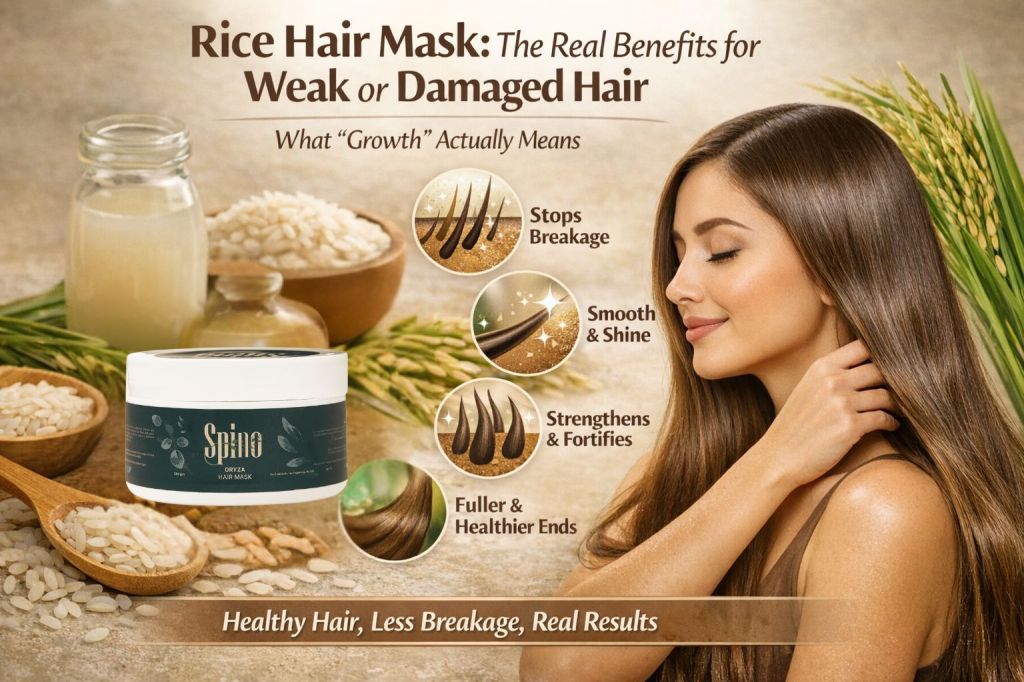
Its role is not to aggressively restructure the hair. Its role is to support damaged, tired, or stressed hair so it can regain a softer feel, a smoother appearance, and healthier-looking shine.
This makes it especially relevant for hair that suffers from dryness, weakness, frizz, heat styling, coloring, or repeated chemical exposure. Instead of adding another layer of stress, the mask supports a more balanced beauty routine: nourish, soften, improve texture, then style.
What makes this approach more sustainable is that it respects the nature of the hair. Curly hair does not need to be punished into straightness. Wavy hair does not need to be flattened to look beautiful. Frizzy hair does not always need a chemical reset. In many cases, it needs better care, better moisture balance, and more patience.
The real result women want
Most women who ask for straightening are not only asking for straight hair. They are asking for:
Hair that feels softer.
Hair that looks shinier.
Hair that is easier to comb.
Hair that behaves better during the day.
Hair that looks healthier in photos and in real life.
These goals can often be approached through recovery-based care rather than aggressive straightening. A good hair mask will not promise to permanently change your natural hair identity. But it can help your hair look more polished, feel smoother, and become easier to manage with consistent use.
That is a safer and more realistic promise.
A better beauty decision
As regulators continue reviewing the safety of certain straightening ingredients, consumers should be more cautious about treatments that combine strong chemical action, scalp contact, and high heat. Availability in the market does not always mean that a product is the best choice for long-term wellbeing.
The future of hair beauty should not be built on fear, but it should be built on awareness.
Before choosing a straightening treatment, ask yourself: Am I trying to make my hair healthier, or am I trying to force it to look healthy for a few weeks?
Spino Rice Hair Mask supports the healthier direction. It is a treatment for women who want visible improvement without extreme shortcuts. It helps damaged hair regain softness, manageability, and natural-looking shine through care—not force.
Because beautiful hair is not only hair that looks controlled.
Beautiful hair is hair that feels alive, healthy, and naturally confident.



 Spino Blog | Clean Beauty, Naturally